Engineered Pressure Relief Solutions for Critical Industrial Applications
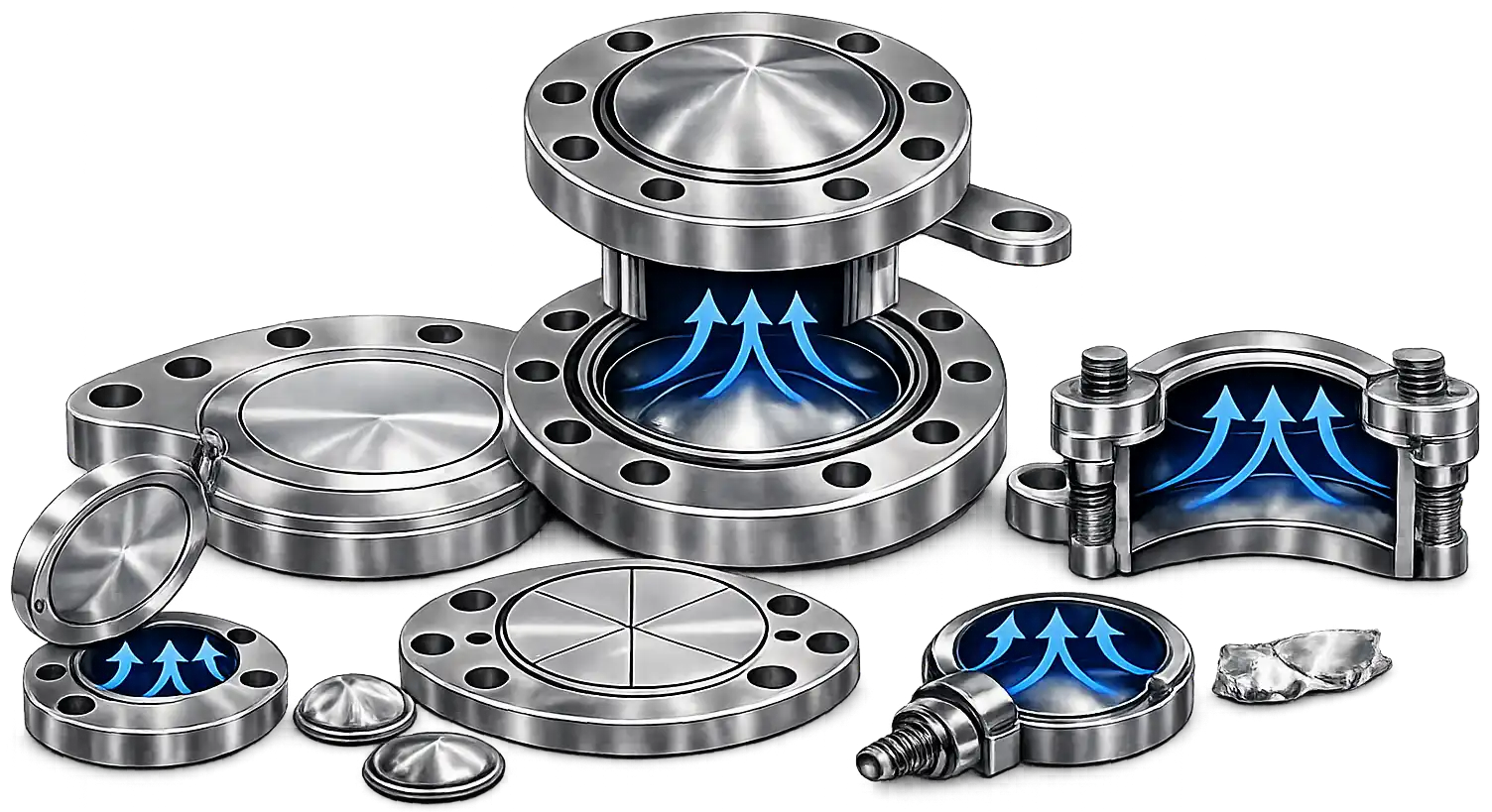
Ventil Components Pvt. Ltd. manufactures and supplies rupture discs, bursting discs, burst discs and pressure relief discs for industrial pressure protection applications across Europe and international markets.
Our rupture disc solutions are designed to provide rapid, reliable and non-reclosing protection against excessive pressure and vacuum conditions in pressure vessels, reactors, pipelines, storage tanks and process equipment.
With a product portfolio covering reverse acting rupture discs, sanitary rupture discs, composite rupture discs, flat atmospheric discs and rupture disc holders, Ventil Components provides engineered pressure relief solutions for chemical, pharmaceutical, food & beverage, petrochemical, oil & gas and other process industries.
Whether you are looking for a rupture disc manufacturer in Europe, bursting disc supplier, reverse buckling rupture disc, sanitary bursting disc or custom pressure relief disc, our engineering team can support your application requirements.
Request a Rupture Disc Quote →
Rupture Disc Manufacturer & Supplier
A rupture disc is a non-reclosing pressure relief device designed to open when the pressure reaches a specified burst pressure at a defined temperature.
Unlike a conventional pressure relief valve, a rupture disc does not automatically close after activation. The disc provides a rapid pressure-relief path and is replaced after operation.
Ventil Components manufactures rupture disc solutions for applications where fast pressure relief, leak-tightness, corrosion resistance, hygienic design or reliable overpressure protection are important.
Our solutions can be engineered according to application requirements including:
- Burst pressure
- Operating temperature
- Process medium
- Vacuum conditions
- Back pressure
- Required relief area
- Disc material
- Connection type
- Installation arrangement
- Operating pressure ratio
- Chemical compatibility
Rupture Disc Types
Reverse Acting Rupture Discs
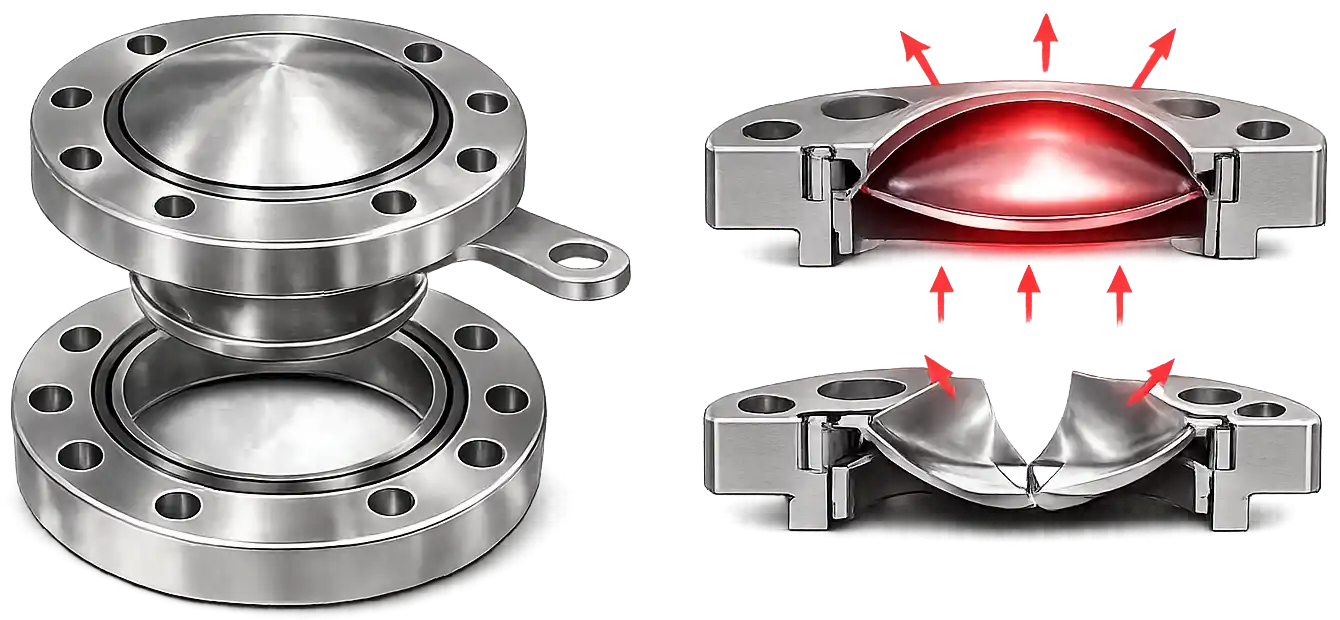
Reverse acting rupture discs are designed for applications involving demanding operating conditions, pressure cycling and vacuum requirements.
The disc operates by reversing its dome and opening along a controlled scoring or opening mechanism when the specified burst condition is reached.
Typical applications
- Chemical reactors
- Pressure vessels
- Process pipelines
- Pharmaceutical equipment
- Gas systems
- Petrochemical equipment
- High-cycle pressure systems
Explore Reverse Acting Rupture Discs →
Sanitary Rupture Discs
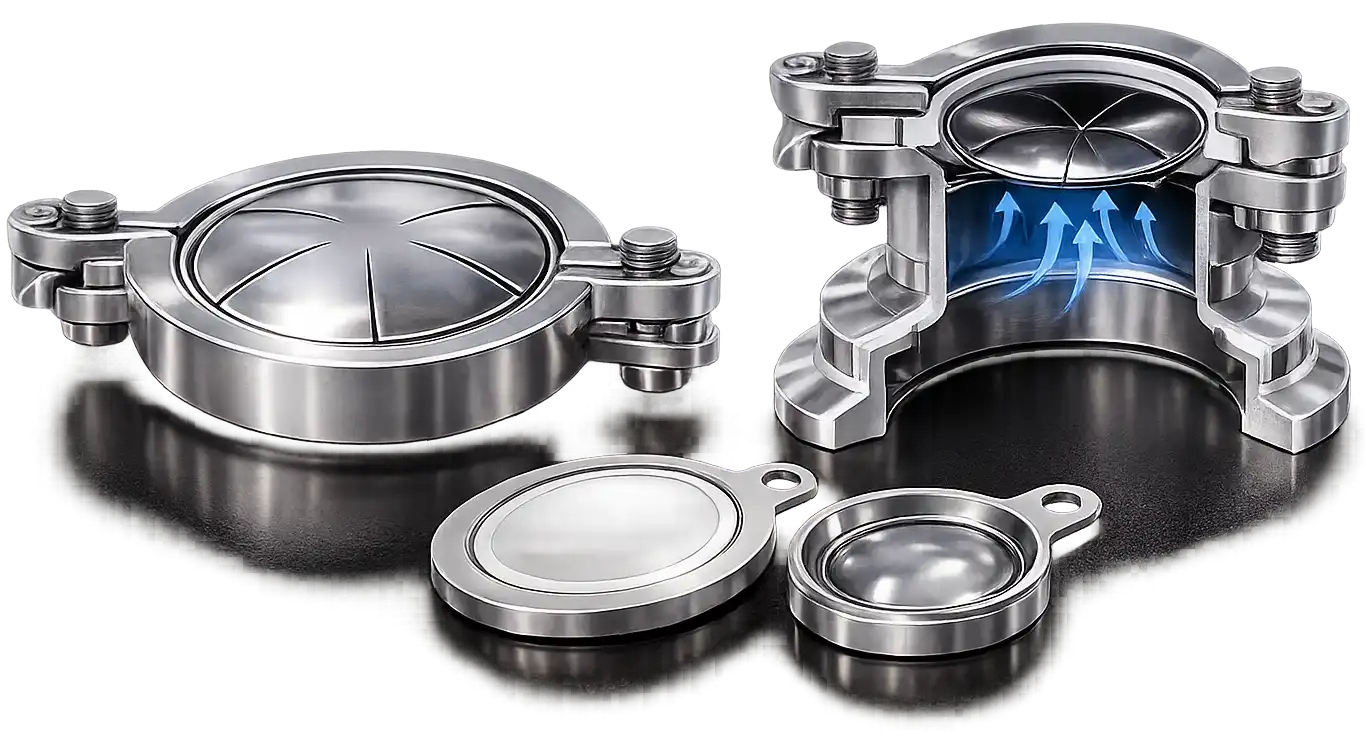
Ventil’s Scored Sanitary Reverse Acting Disc (SSR) is designed for hygienic and high-purity applications where pressure protection must be combined with cleanability and sanitary connections.
The disc is available in SS 316, SS 316L and Hastelloy C, with sanitary connection options and non-fragmenting construction.
Typical applications include:
- Pharmaceutical processing
- Biotechnology
- Dairy processing
- Food & beverage
- Nutraceutical manufacturing
- Personal care
- Hygienic process equipment
The SSR range currently covers sizes from 1.5” to 4”, with application-specific burst pressure options and full vacuum resistance.
Explore Sanitary Rupture Discs →
Composite Rupture Discs
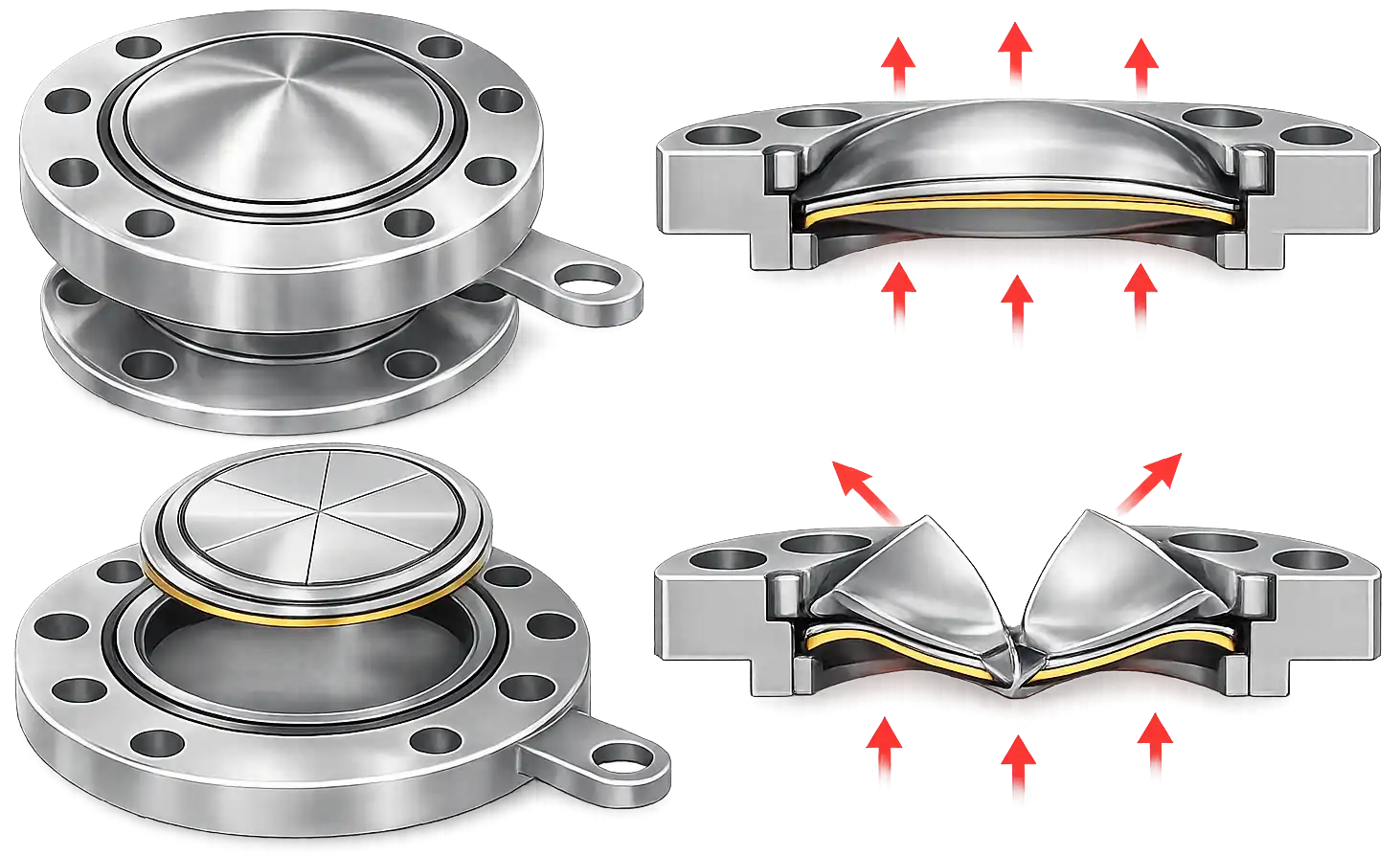
Composite rupture discs use a multi-layer construction to provide pressure protection across applications requiring specific material and performance characteristics.
Ventil’s Composite Rupture Disc range is available for applications requiring customized pressure protection, corrosion resistance and low-pressure relief.
Typical applications include:
- Storage vessels
- Low-pressure tanks
- Chemical processing
- Corrosive media
- Process equipment
- Gas and liquid applications
The Ventil CRD range includes sizes from 1” to 24”, with burst-pressure options available according to application requirements.
Explore Composite Rupture Discs →
Flat Atmospheric Rupture Discs
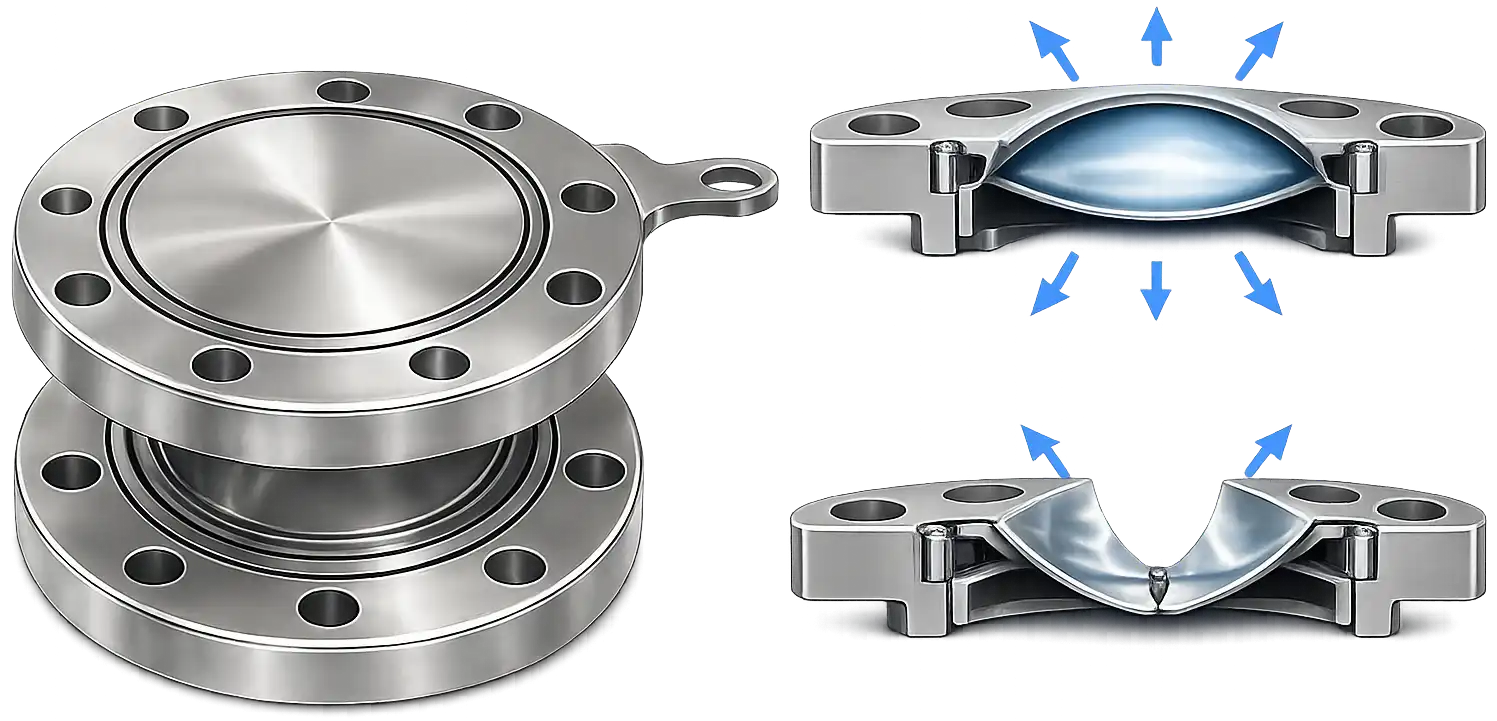
Flat atmospheric discs are designed for low-pressure overpressure and vacuum protection in tanks, vessels and process systems.
They can be used as primary or secondary pressure protection depending on the system design.
Typical applications include:
- Storage tanks
- Low-pressure vessels
- Pipelines
- Atmospheric systems
- Chemical storage
- Process equipment
Ventil’s FAD range covers applications from approximately 0.4 barg to 6 barg, with sizes available from 1” to 24”.
Explore Flat Atmospheric Discs →
Rupture Disc Holders
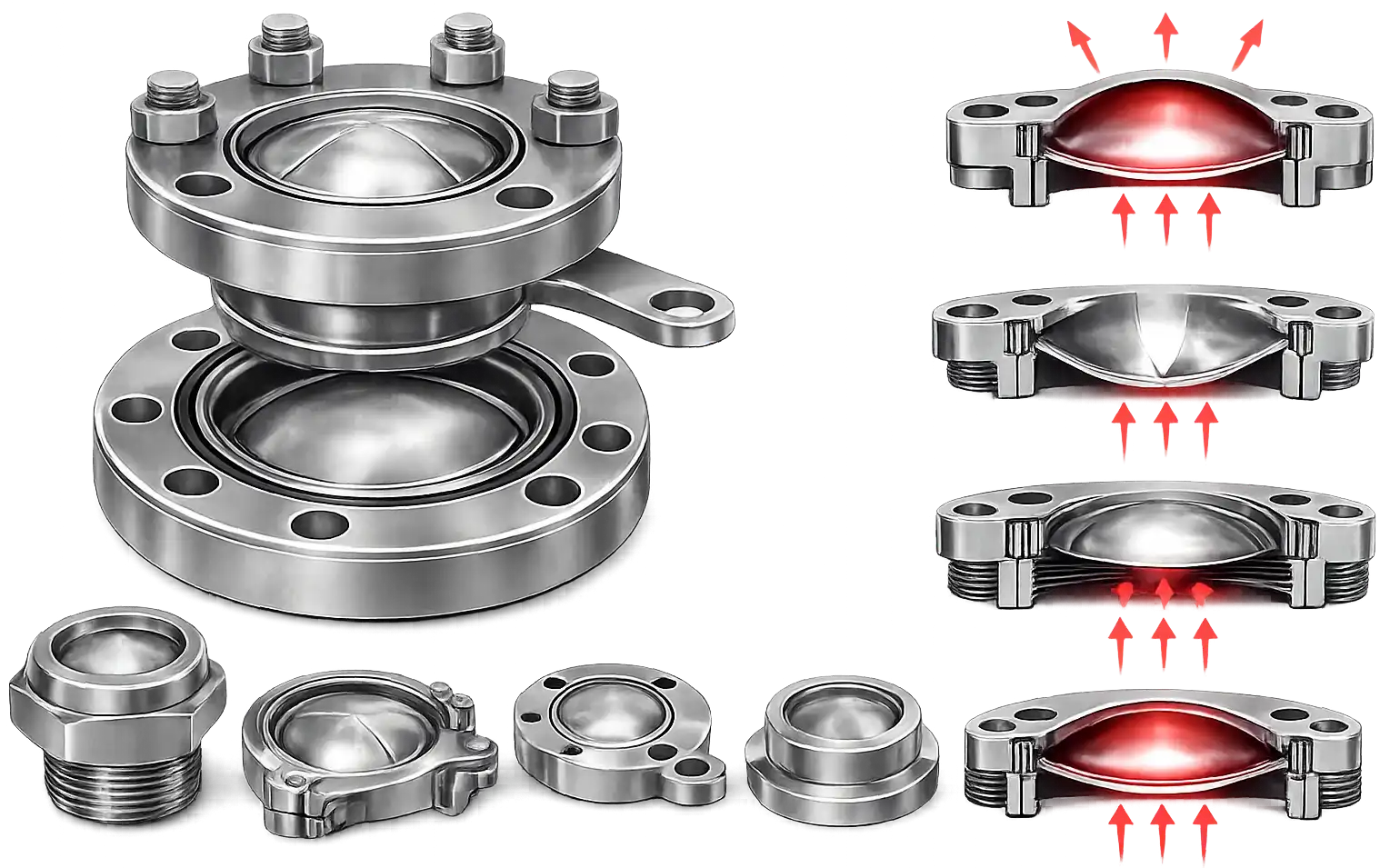
Correct installation is essential for reliable rupture disc performance.
Ventil supplies rupture disc holders designed for different disc configurations and installation requirements.
Available configurations can include:
- Flanged rupture disc holders
- Threaded holders
- Sanitary holders
- Low-pressure holders
- Vacuum dome holders
- Custom holders
Holder configurations can be supplied for ANSI, DIN, ISO and sanitary connections, depending on the application.
Explore Rupture Disc Holders →
Rupture Disc vs Bursting Disc vs Burst Disc
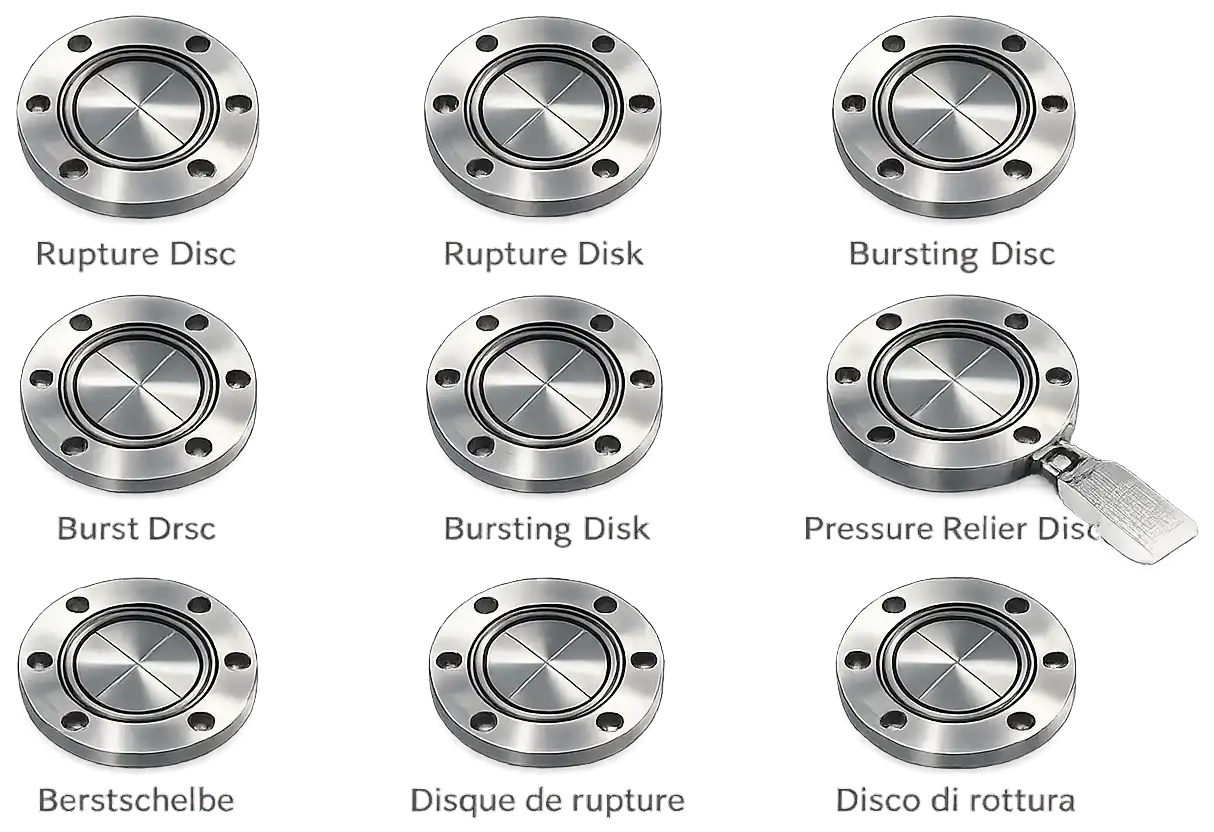
Different European markets use different terminology for essentially the same pressure-relief technology.
Therefore, Ventil’s European SEO strategy should naturally include these terminology variations rather than repeatedly targeting only “rupture disc.”
European Rupture Disc Standards & Compliance
For European pressure-relief applications, engineering and procurement teams need to consider applicable standards, regulations and equipment requirements.
ISO identifies ISO 4126-2:2018 as the current international edition, and the European adoption is EN ISO 4126-2:2019.
The European Commission identifies PED 2014/68/EU as the applicable pressure-equipment directive and maintains the associated harmonised-standard information.
Important
The applicable standard, conformity assessment route, CE requirements and documentation depend on the complete equipment/system and its intended application.
Ventil Components can work with customers to identify the relevant technical requirements for their rupture disc application.
Chemical Industry
Protection of reactors, vessels, pipelines and process systems against dangerous pressure excursions.

Pharmaceutical Industry
Hygienic and sanitary rupture disc solutions for pressure-sensitive pharmaceutical processes.
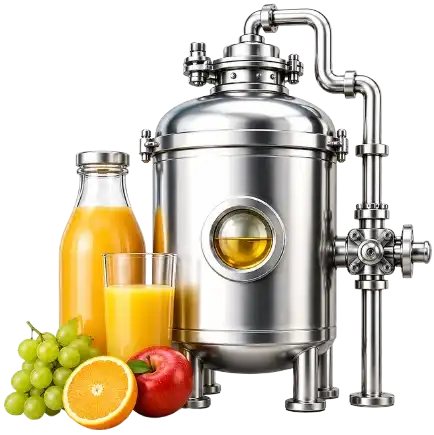
Food & Beverage
Sanitary pressure protection for tanks, vessels and process equipment.
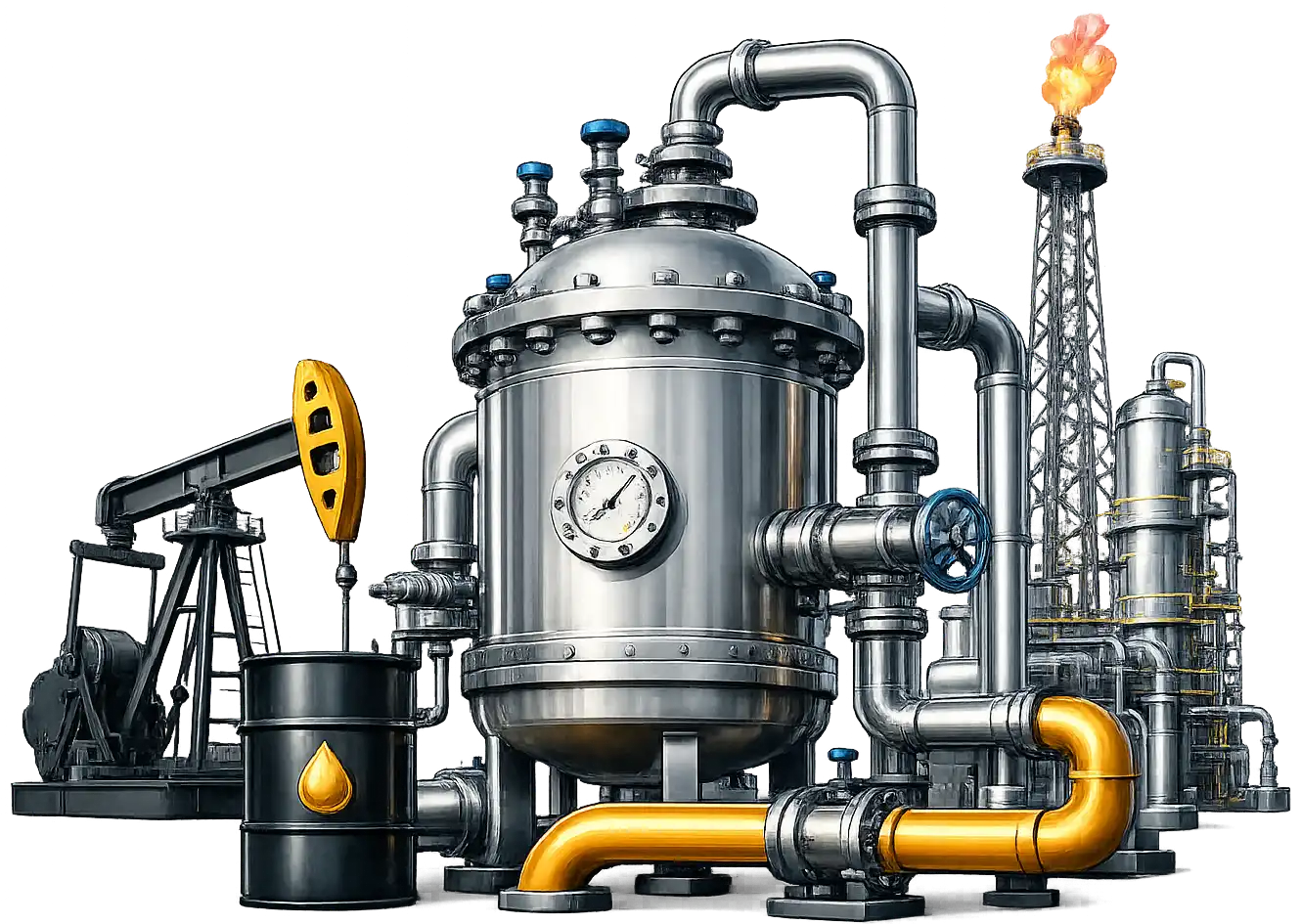
Oil & Gas
Pressure protection for pipelines, vessels, processing equipment and hydrocarbon systems.
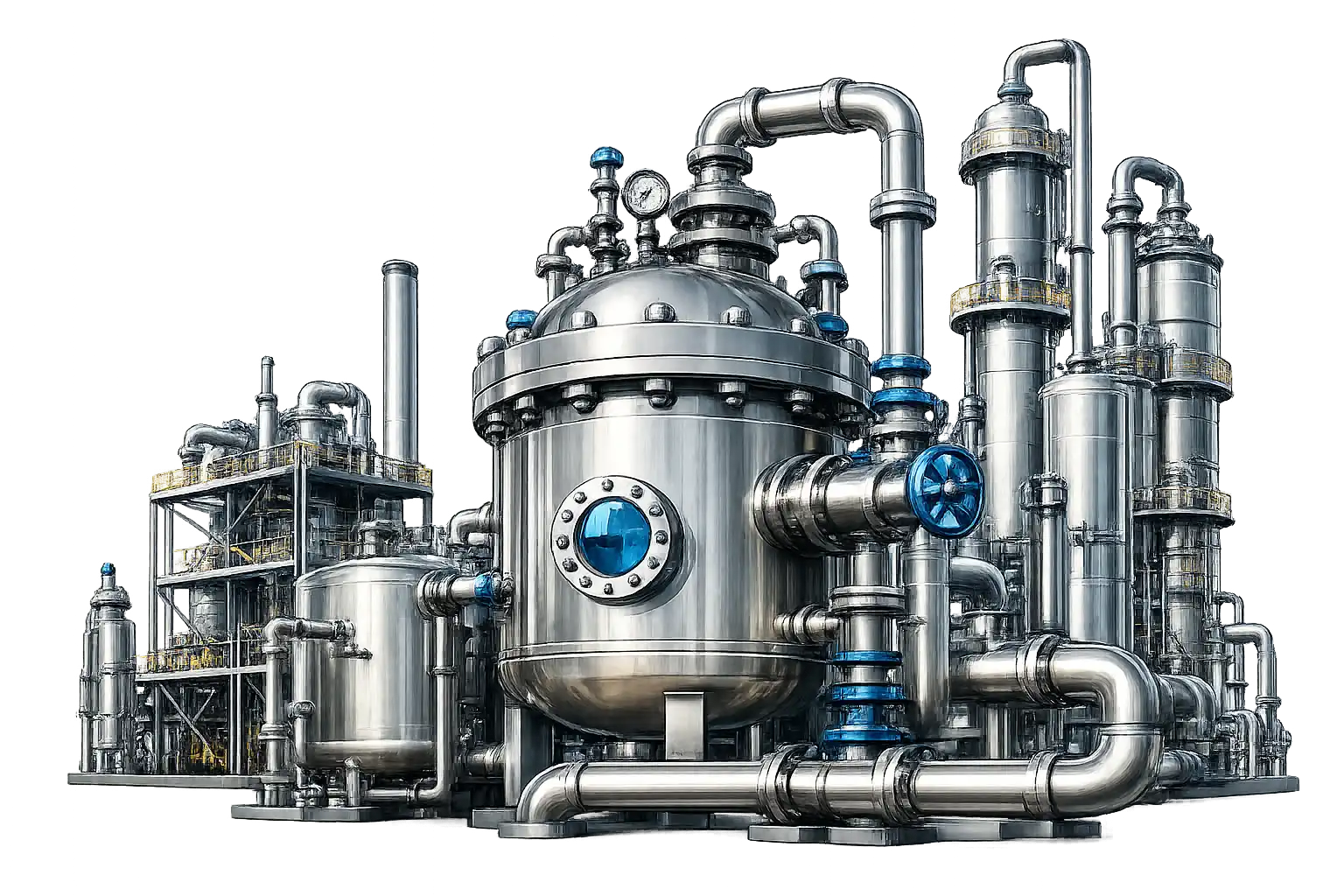
Petrochemical Industry
Protection of process equipment exposed to high pressure, temperature and aggressive media.
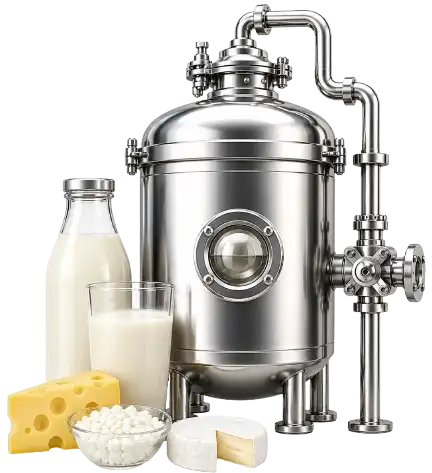
Dairy Industry
Sanitary rupture discs for hygienic processing systems.

Nutraceutical Industry
Pressure protection for controlled manufacturing and processing environments.
Personal Care & Cosmetics
Hygienic pressure relief solutions for production and processing equipment.
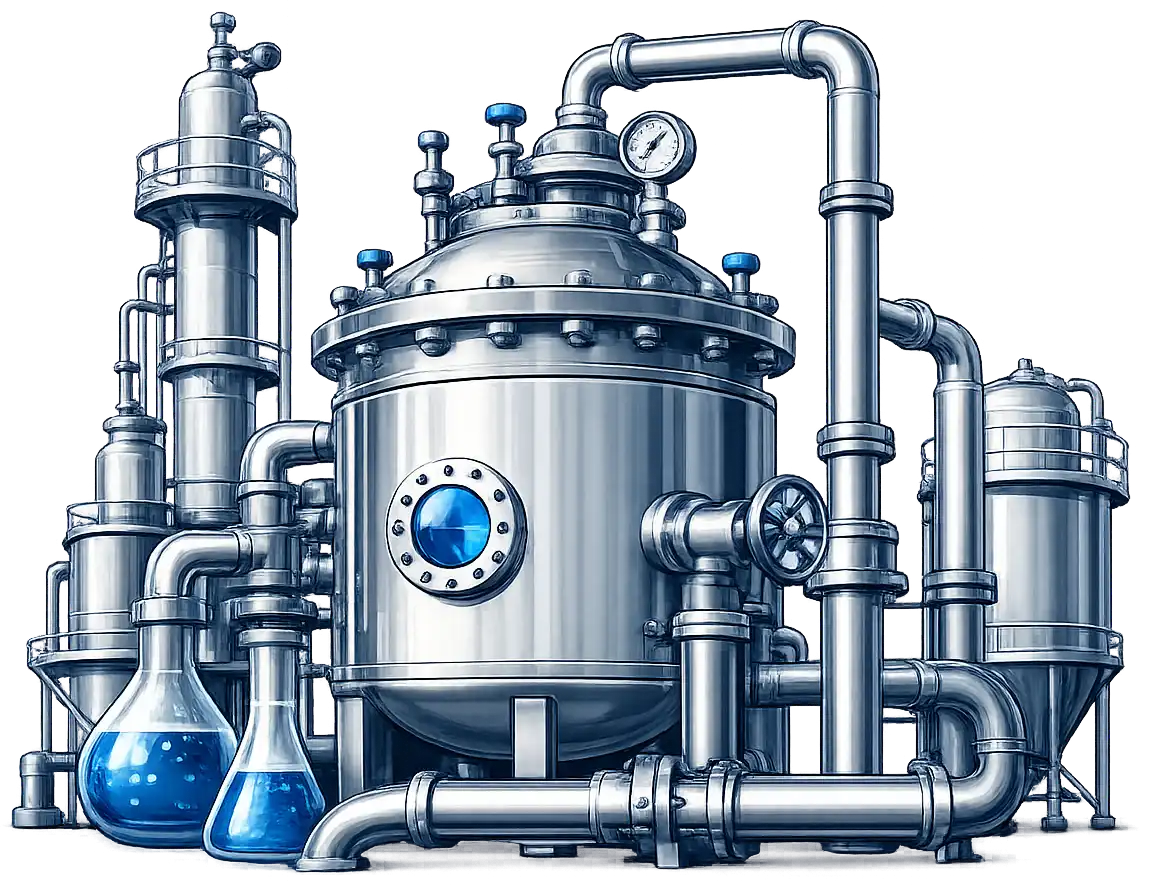
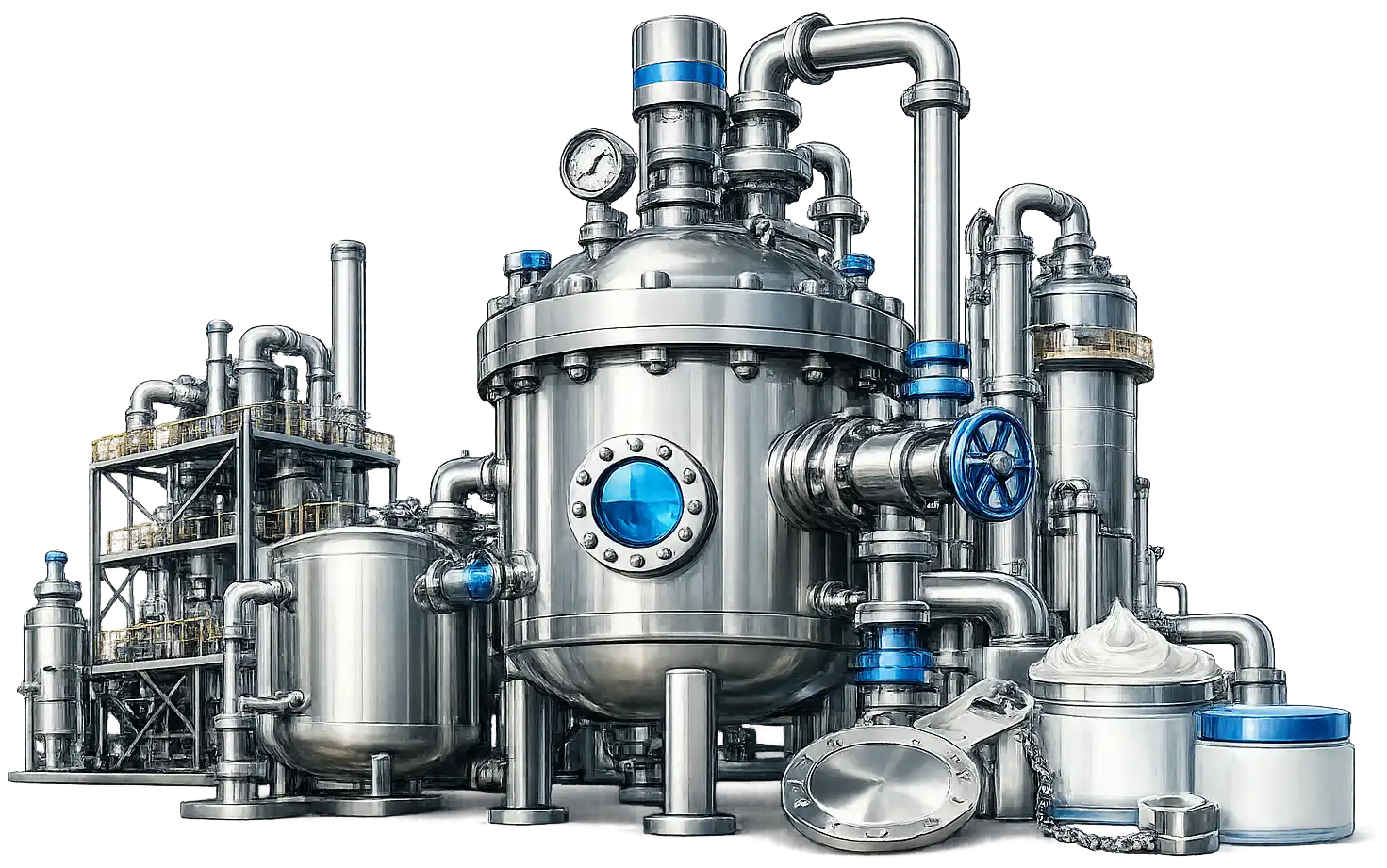
Ventil rupture discs can be engineered for a wide range of industrial applications.
How to Select the Right Rupture Disc
Selecting a rupture disc should be based on the complete operating conditions rather than burst pressure alone.
Determine the required burst pressure
Pressure + temperature specification
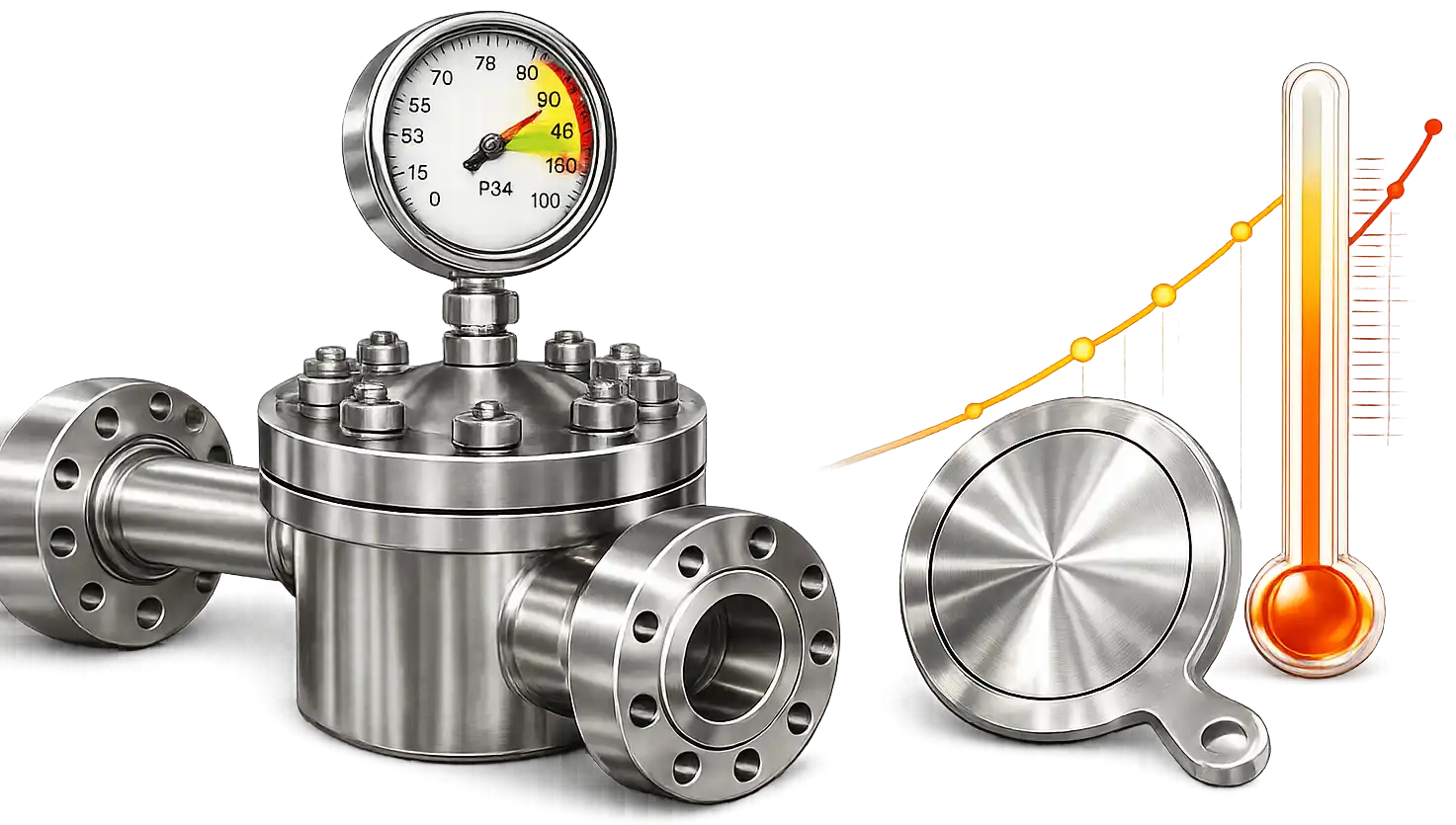
Specify the required burst pressure together with the corresponding temperature. This forms the primary design parameter for selecting the correct disc rating.
Check operating pressure
Evaluate against the disc's operating ratio
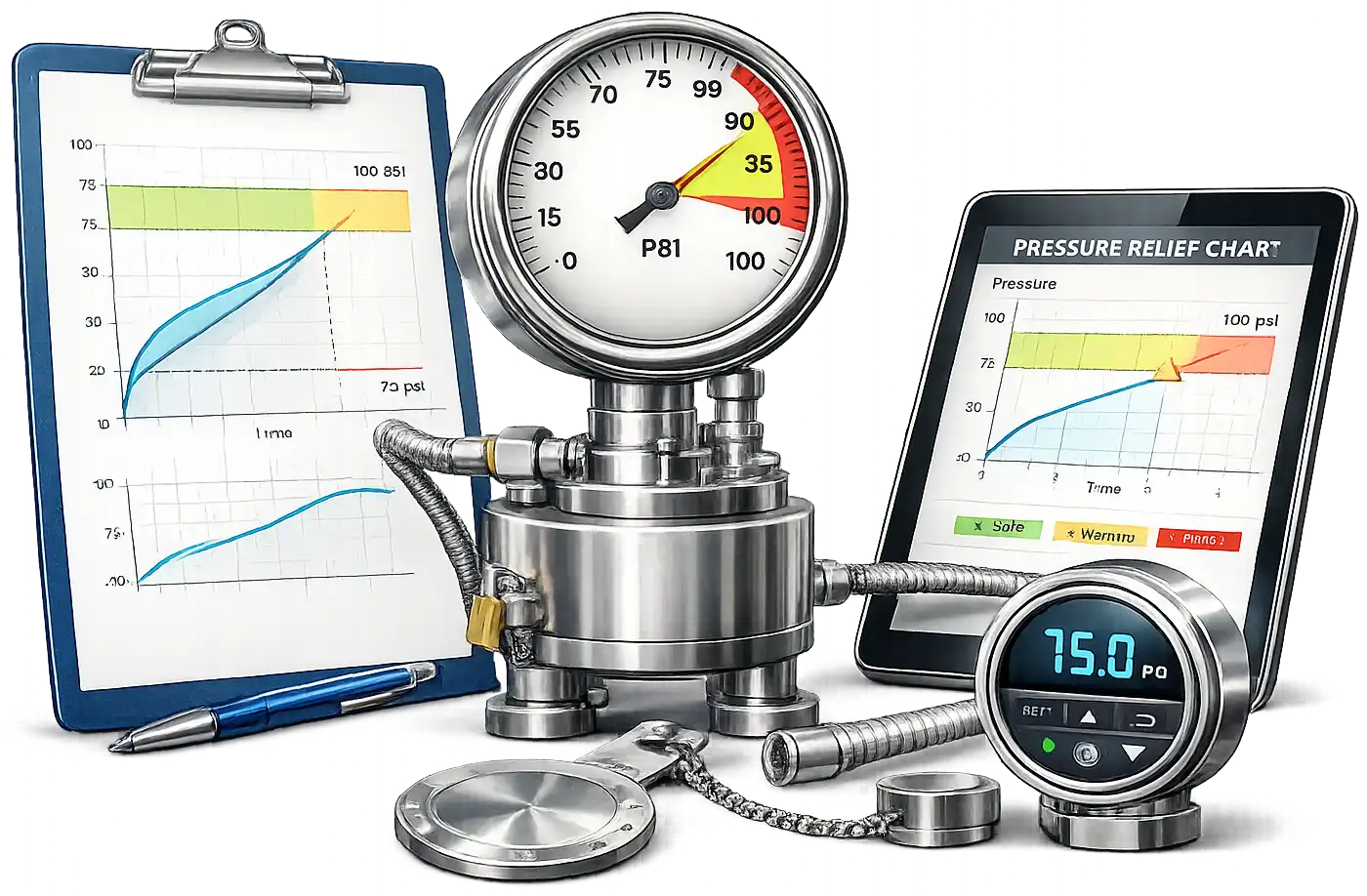
The normal operating pressure should be evaluated against the selected rupture disc's operating ratio to ensure safe and reliable operation throughout the system's lifecycle.
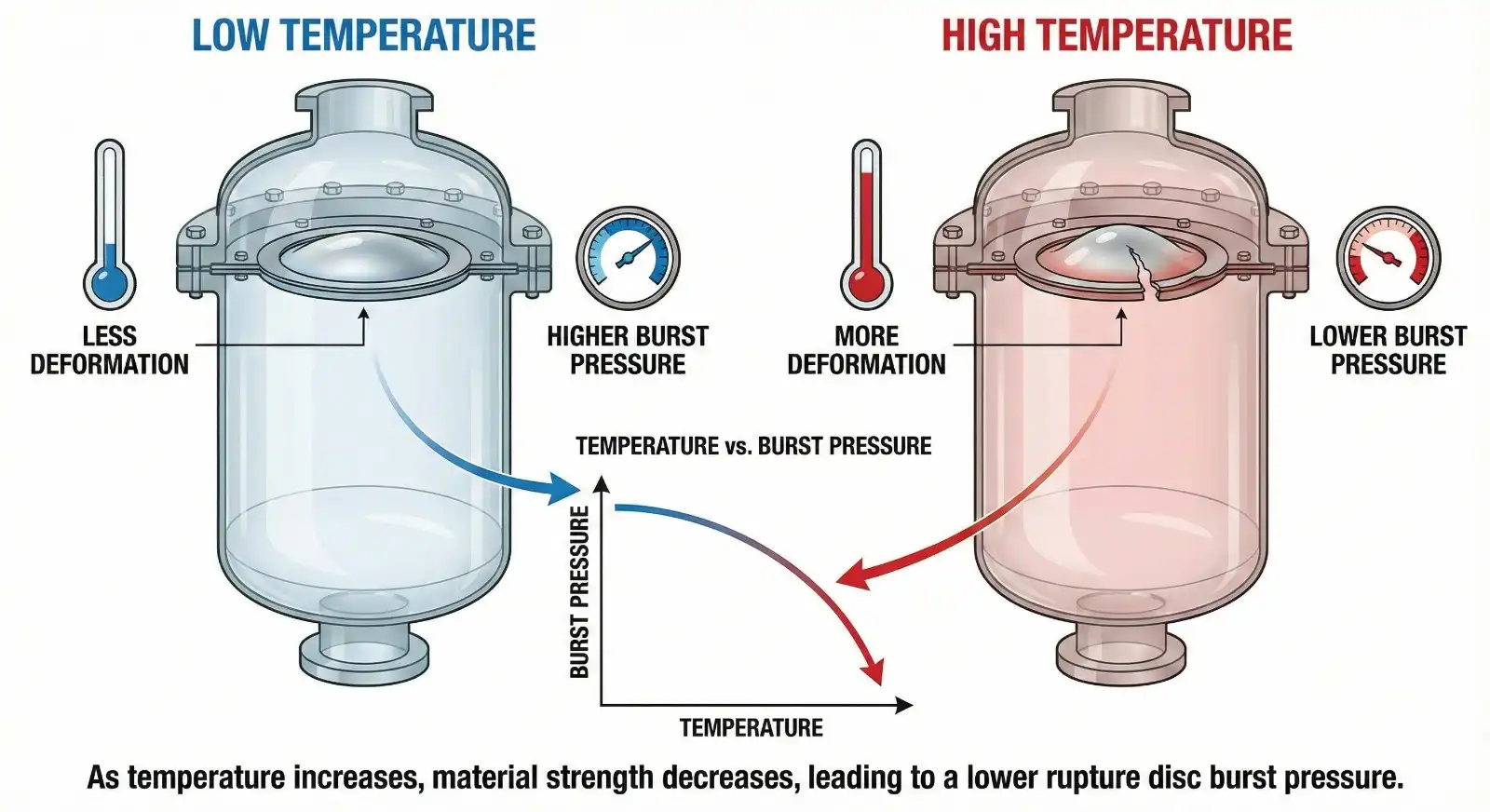
Determine operating temperature
Temperature affects burst performance
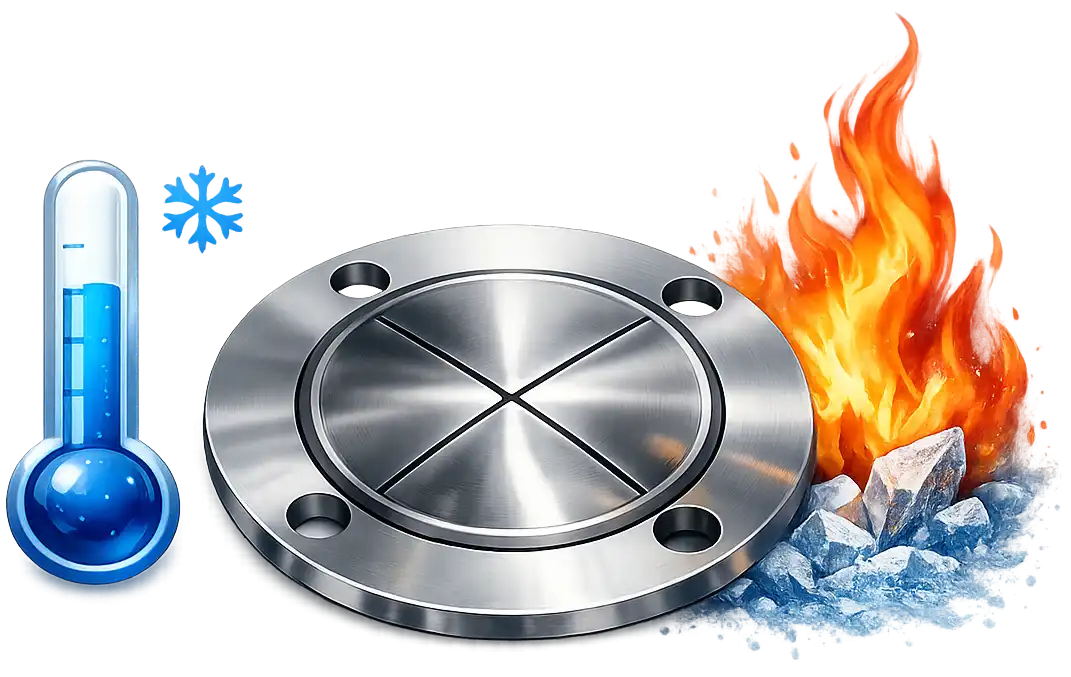
Temperature can affect the mechanical properties and burst performance of the disc material. Both minimum and maximum operating temperatures must be specified.
Identify the process medium
Gas, liquid, vapour, chemical or multiphase
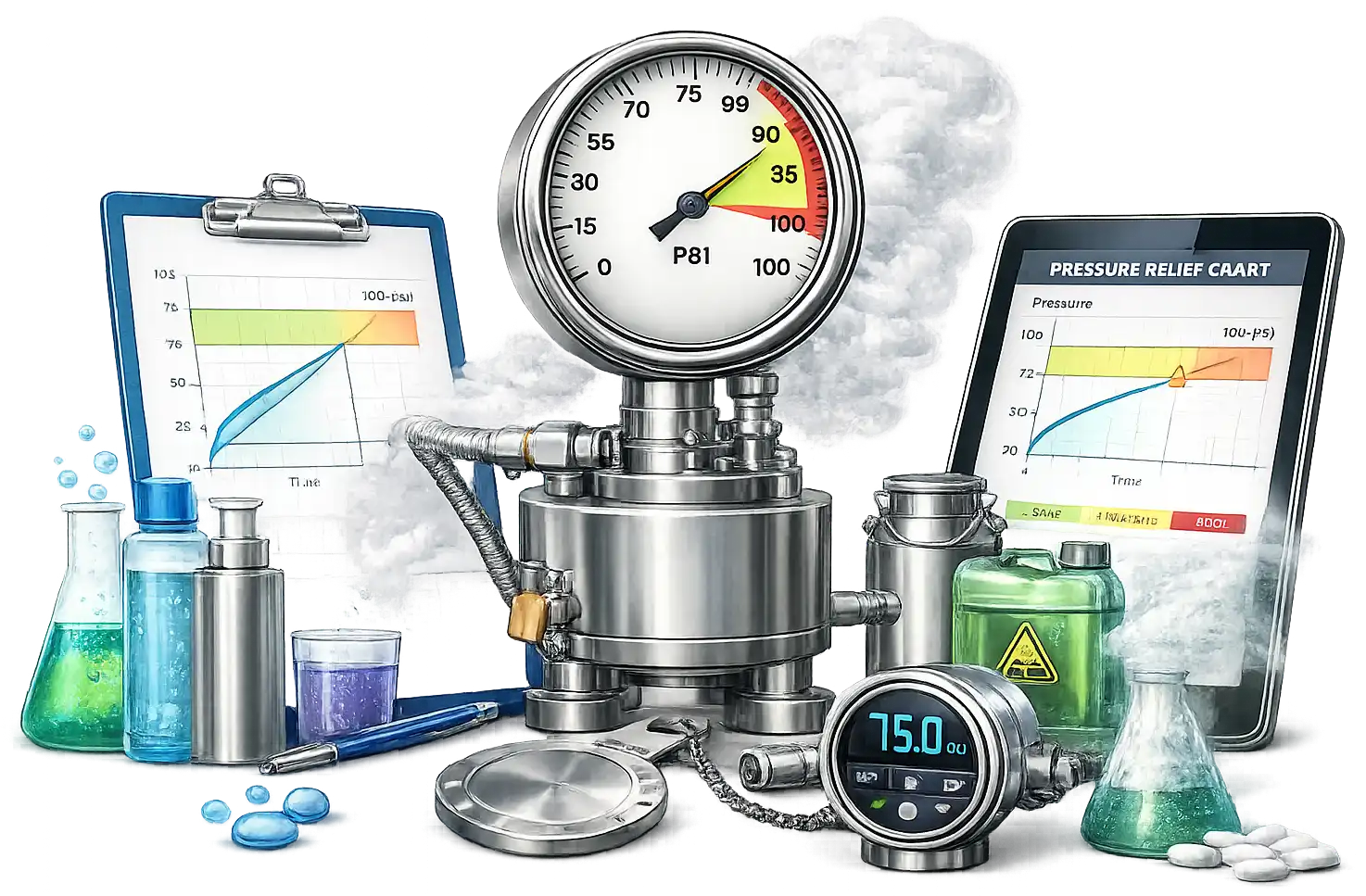
Specify whether the disc will handle:
- Gas
- Vapour
- Liquid
- Steam
- Corrosive chemicals
- Toxic media
- Pharmaceutical products
- Food products
- Multiphase media
Consider vacuum conditions
Select for appropriate vacuum resistance
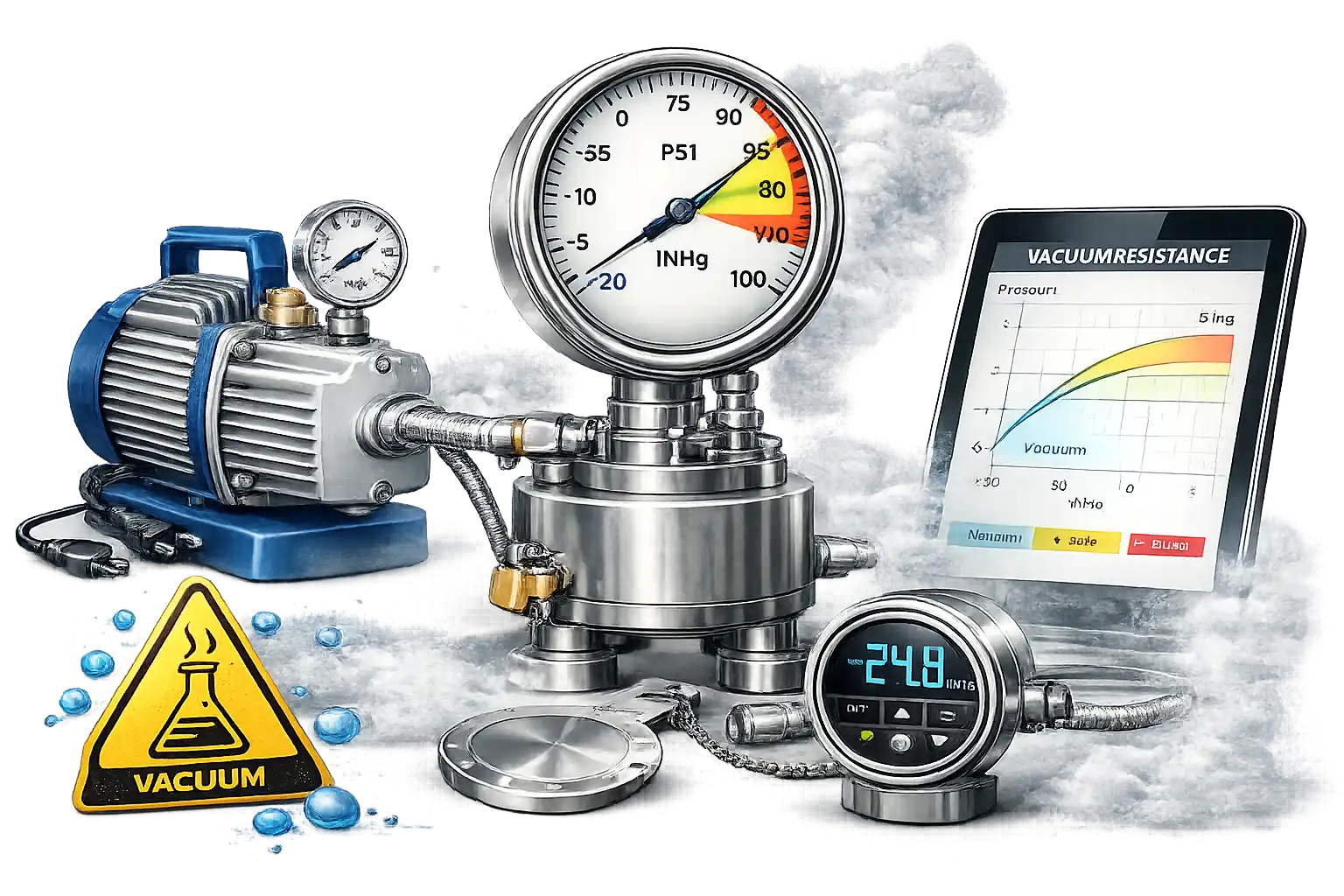
If the system can experience vacuum, the rupture disc must be selected for appropriate vacuum resistance to prevent premature actuation or structural failure under reverse pressure.
Evaluate back pressure
Differential and downstream pressure effects
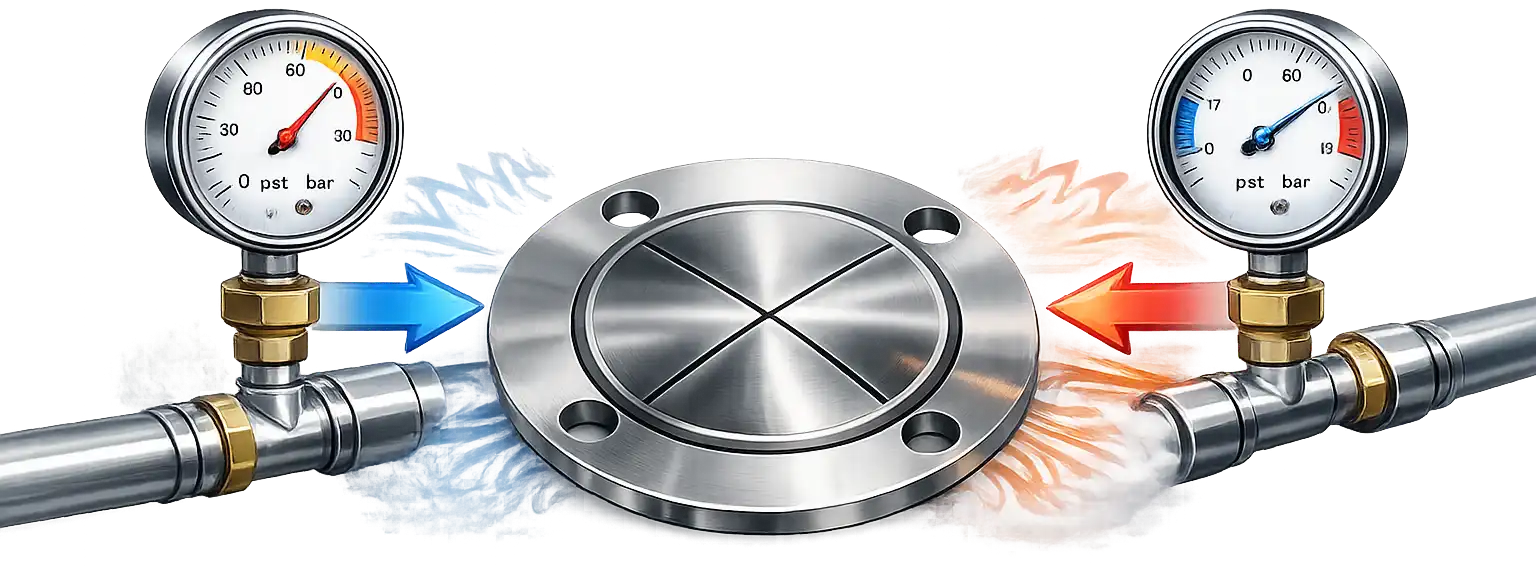
Differential pressure and downstream back pressure can influence rupture disc selection and installation. The net burst pressure must account for any back pressure present in the discharge system.
Select the correct material
Temperature, corrosion, process chemistry
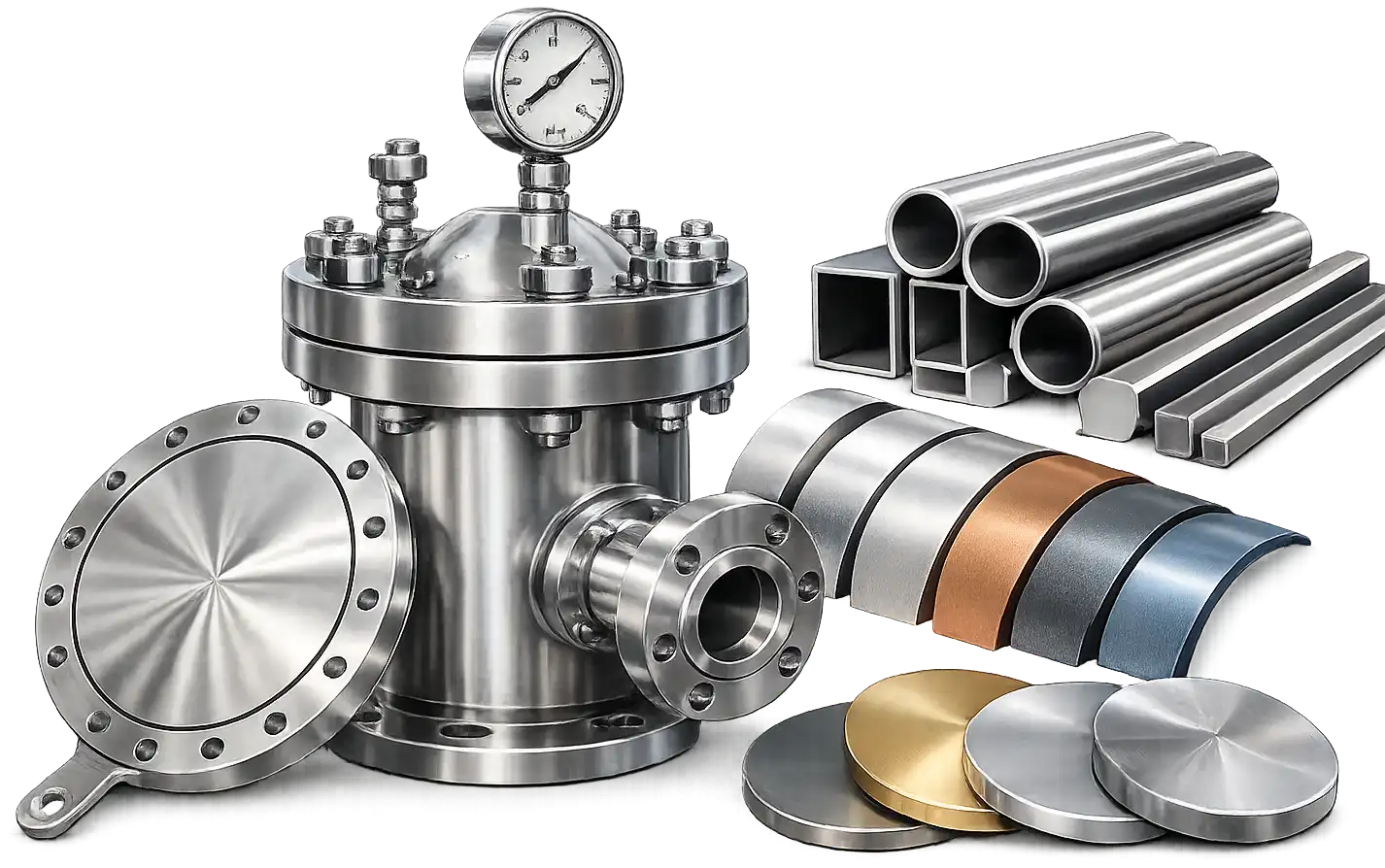
Material selection depends on:
- Temperature
- Pressure
- Corrosion
- Process chemistry
- Cleanability
- Hygienic requirements
Available materials include stainless steels and special alloys depending on design and application.
Select the correct holder
Disc and holder as a matched assembly
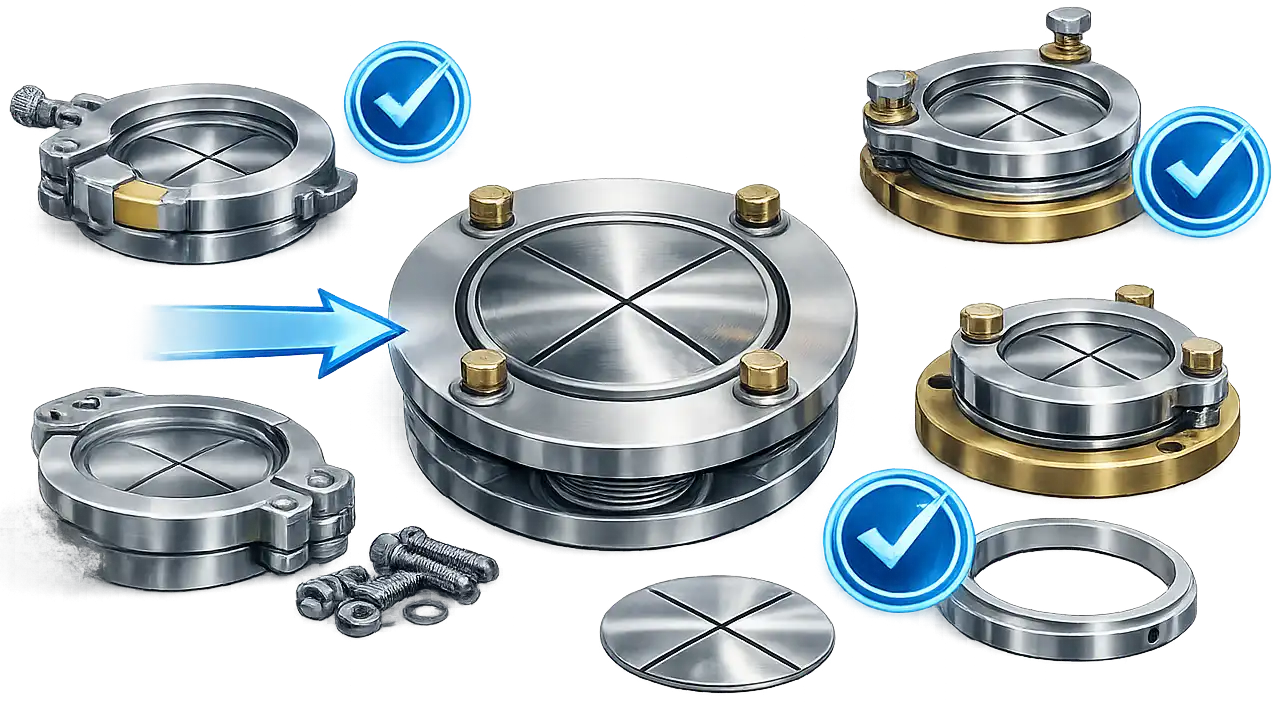
The rupture disc and holder should be considered as an assembly to ensure proper installation and performance. Mismatched holders can affect burst accuracy and may void certifications.
Basic Working Principle
European process industries require pressure protection solutions that combine engineering accuracy, documentation, material compatibility and regulatory awareness.
Ventil Components supports customers requiring rupture discs for:
For European procurement teams, OEMs, EPC contractors and plant engineers, Ventil can provide application-specific rupture disc solutions based on process conditions and equipment requirements.
Why Choose Ventil Components?
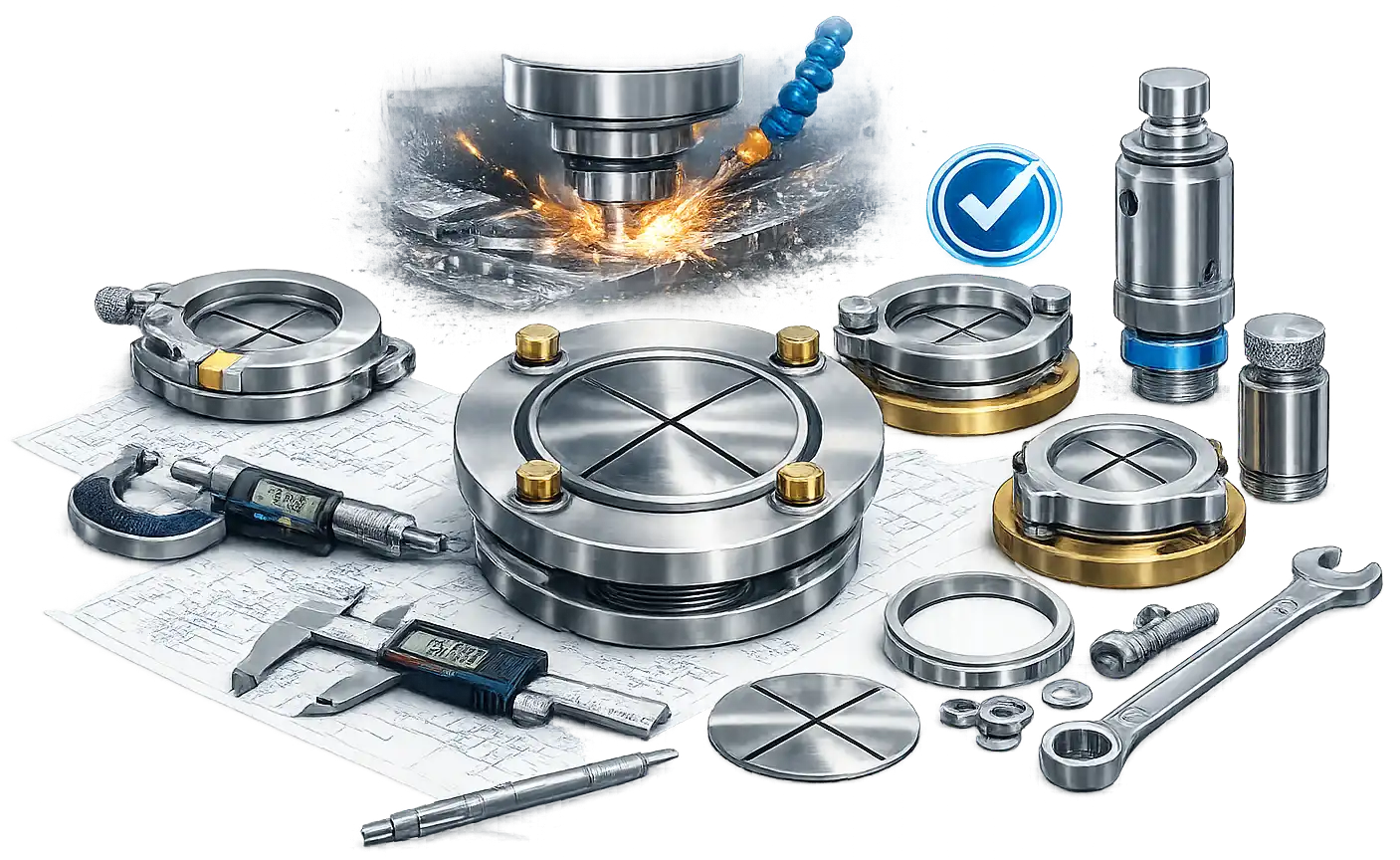
Engineering-Focused Manufacturing
Ventil Components develops pressure safety products for demanding industrial applications.
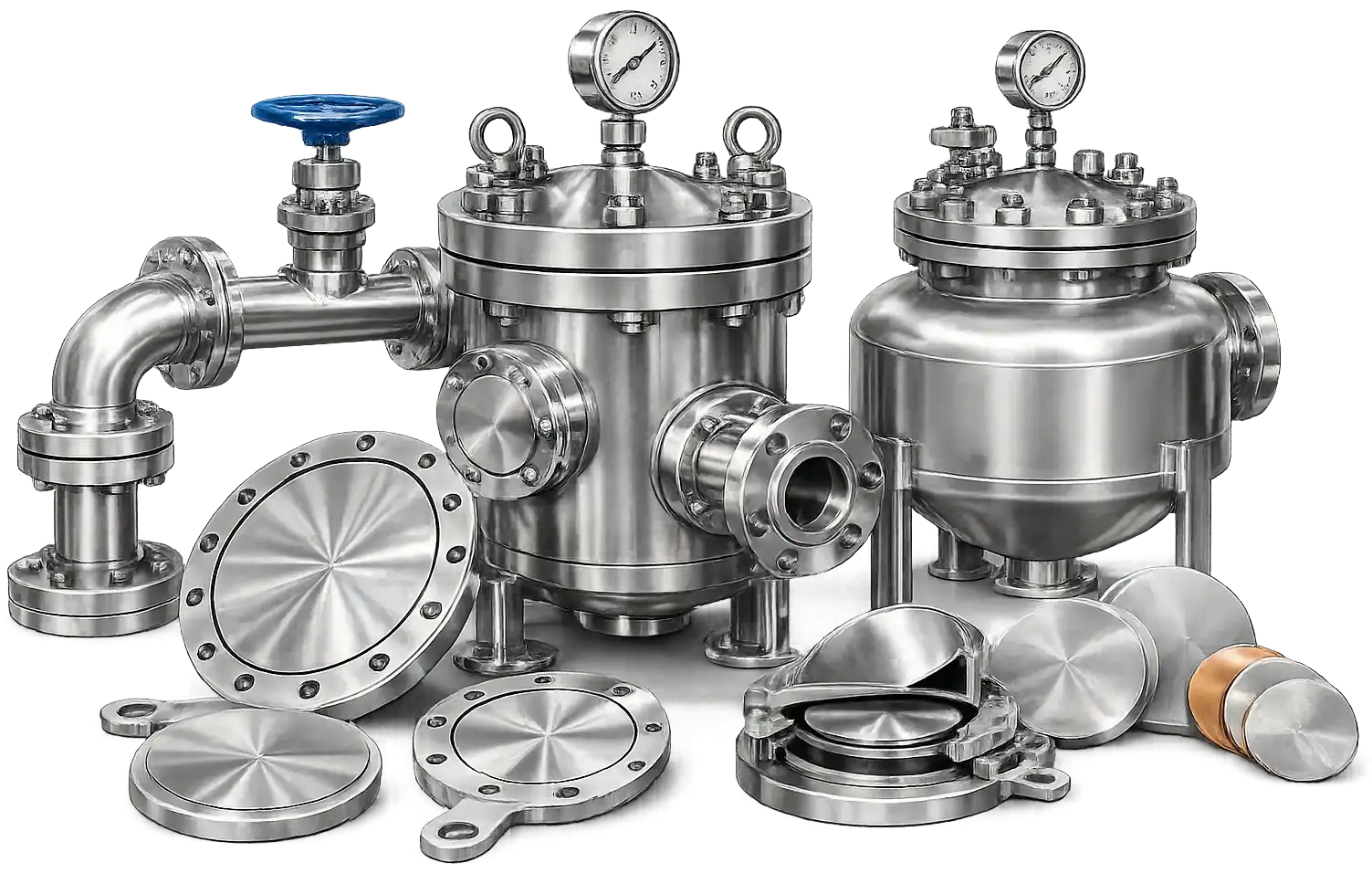
Application-Specific Solutions
Rupture discs can be selected and configured according to pressure, temperature, medium, size, connection and installation requirements.
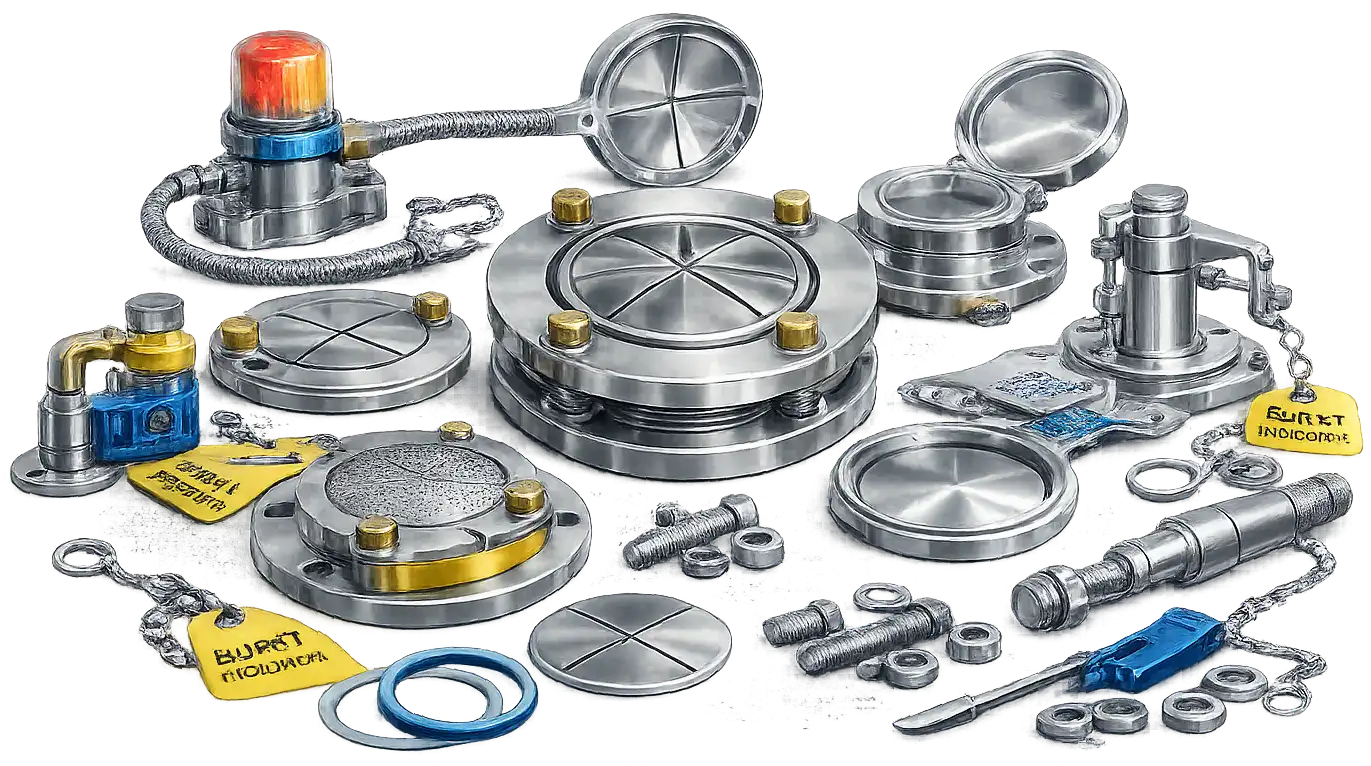
Wide Product Portfolio
Our pressure-relief portfolio includes:
- Reverse acting rupture discs
- Sanitary rupture discs
- Composite rupture discs
- Flat atmospheric discs
- Rupture disc holders
- Rupture disc accessories
Custom Engineering
Where standard configurations are not suitable, application-specific solutions can be evaluated by our engineering team.

Technical Support
Our team can assist engineers and procurement teams with rupture disc selection, sizing information, holder configuration and technical requirements.
Frequently Asked Questions
A rupture disc is a non-reclosing pressure relief device designed to open at a predetermined pressure and temperature to protect pressure equipment from excessive pressure.
Rupture discs are also called burst discs, bursting discs, bursting disks, rupture disks and pressure relief discs.
In Germany, the common term is Berstscheibe. In France, the term is disque de rupture. In Italy, it is commonly referred to as disco di rottura, while Spanish-language searches commonly use disco de ruptura.
A bursting disc is another widely used term for a rupture disc, particularly in the UK and European industrial markets.
A reverse acting rupture disc is designed to operate under reverse loading, with the disc opening after reaching its specified burst condition. These designs are commonly selected for demanding pressure-cycle and vacuum applications.
Some rupture disc designs can provide vacuum resistance or vacuum relief. The disc must be specifically selected for the system’s pressure and vacuum conditions.
Yes. Rupture discs can be installed in combination with safety valves in suitable applications, including applications where the disc helps isolate the valve from corrosive or fouling process media.
The complete assembly and installation should be engineered for the intended service.
Typically, engineers should provide:
- Required burst pressure
- Burst temperature
- Normal operating pressure
- Operating temperature
- Process medium
- Design pressure
- Design temperature
- Vacuum conditions
- Back pressure
- Required relief area
- Pipe or vessel connection
- Nominal size
- Material requirements
- Installation configuration
Ventil Components manufactures and supplies industrial pressure relief products and can support international and European enquiries. Contact the Ventil engineering team with your operating conditions to discuss the appropriate rupture disc configuration.